AI Workflow Automation in 2026
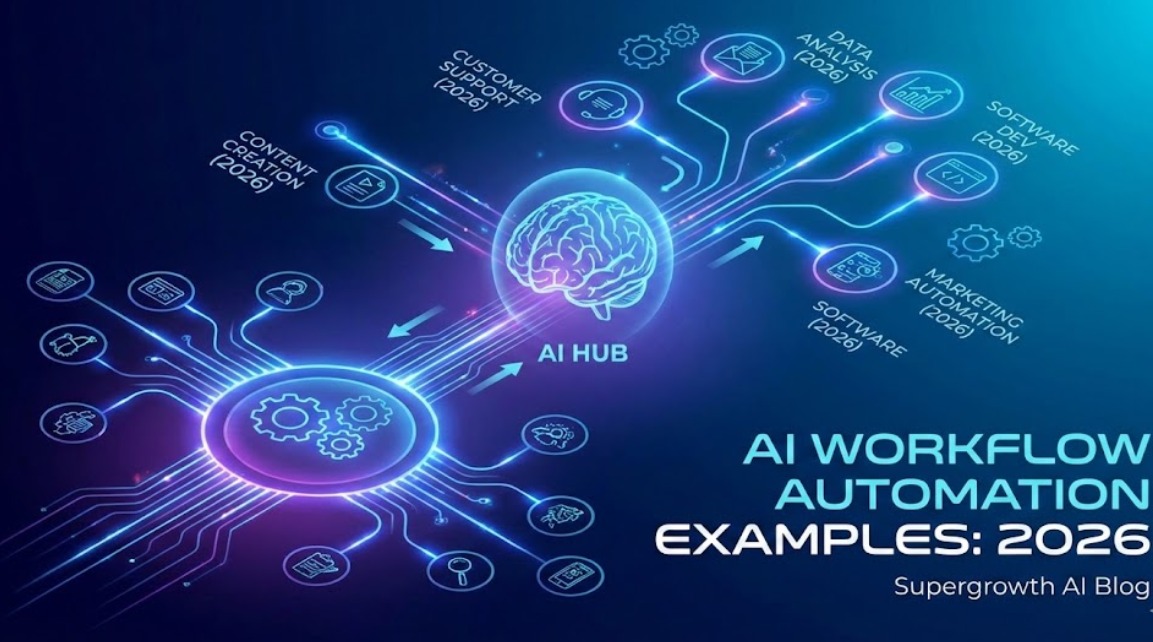
The integration of AI into the workflow process has become a gamechanger for most businesses today. Rather than using AI for one task at a time as was common practice a few years ago, today's businesses use AI as part of a complete workflow, where the AI understands the situation and makes decisions automatically.
Because of this transformation, teams spend less time coordinating repetitive tasks and are instead able to spend more time doing things that are truly valuable to them. To understand this trend clearly, it can be useful to examine how AI workflow automation functions and what industries are currently using AI for this purpose.
How AI Workflow Automation Works
An Artificial Intelligence workflow is an approach the uses Artificial Intelligence to intelligently respond to events using not only pre-determined rules, but also by adjusting workflows based on the available data and contextual information.
A standard AI-enhanced workflow typically consists of:
1.An event triggers the start of a workflow, like a new message, form submission, or modification to information
2.AI analysis to ascertain a user's intent, feeling, or sense of urgency
3.Deciding which action to pursue through a decision-making process
4.Using automation to carry out the decision across applications and platforms
5.Using results from every action to continually learn and improve
The above highlights how workflows will develop and alter as a result of changing business conditions.
Example 1: Customer Support Automation
One of the main applications of AI-powered workflow automation in 2026 is customer service.
When customers contact customer service AI automatically analyses the message to determine intent and tone. For straightforward requests AI responds directly without human intervention, while more urgent or sensitive matters will be forwarded to the right support representative. AI will provide follow-up information, generate summaries, and give ongoing status of all customer inquiries without needing the support representative to do anything.
Result : On average, support teams are better able to respond to greater volumes of requests than in the past and customers will enjoy quicker response times. Agents will devote significantly more time to solving problems that are complex in nature.
Example 2: Sales and Lead Management
Artificial Intelligence Workflows have simplified management of leads while ensuring consistency and efficiency in Sales Teams.
Once an opportunity is added to your system, it will automatically generate the engagement signals & historical data regarding this lead. The leads marked as a priority will receive an automatic outreach request, while other leads will enter an automated follow-up sequence that can occur at any point over time. Sales representatives will also receive a summary of their lead before they make a telephone call to that customer that includes the intent and the key messaging about the customer’s purchase option.
Result : The focused Sales effort, reduced response times, and increased conversion rates without additional work on the part of the Sales Team.
Example 3: Internal Workflows and Reports
In this example the use of AI for automating internal workflows will be particularly relevant to your organisation's internal workflows or functions, such as internal reporting or monitoring.
AI will automate the collection of data from various applications. It will identify trends, detect anomalies, and summarise information in a manner that is easy to understand and use. Teams can receive concise updates, rather than needing to spend time reviewing lengthy Excel spreadsheets or dashboards.
Result : AI will help your organisation make better, faster, and more educated decisions, while also spending less time doing manual reporting.
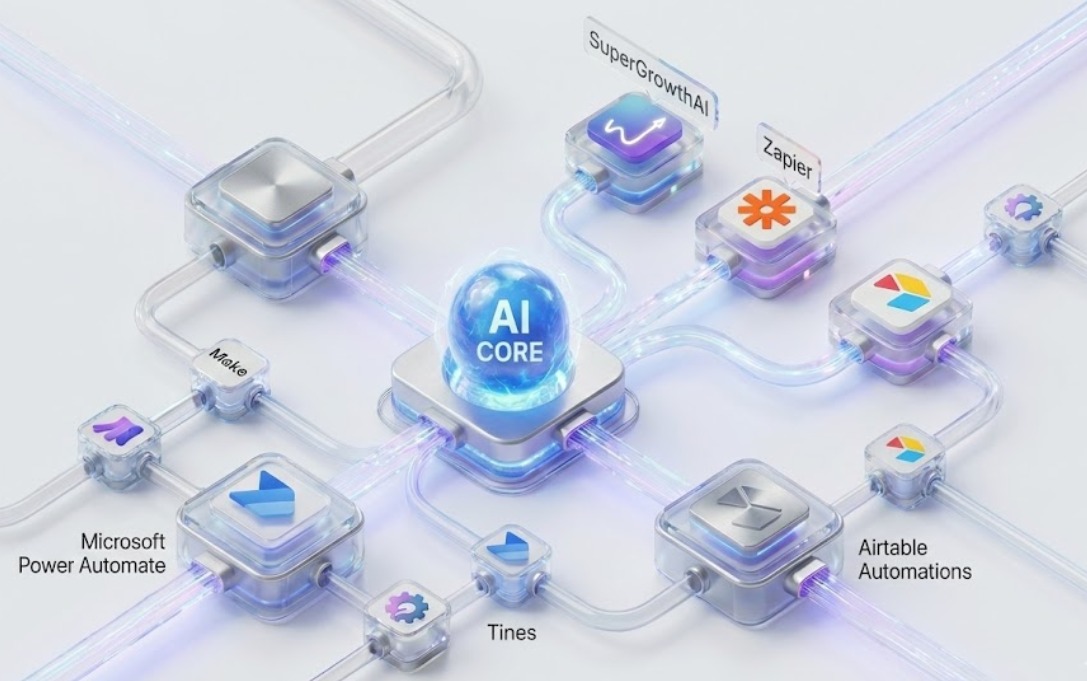
Several of these examples are currently being implemented using current-day automation platforms. A combination of triggers, artificial intelligence decision-making, and multi-step implementations create a more streamlined way for teams to convert ideas into real-world systems without the need for extensive engineering resources and here you can find 9 best AI workflow automation tools in 2026.
The Importance of AI-Based Workflow Automation
Instead of replacing people, AI workflow automation enables companies to streamline their workflows and enhance the visibility of their entire organization. AI-enabled workflow automation can significantly reduce redundant effort required for relationship building, task completion, collaboration and communication between teams, allowing the organization to operate more smoothly and achieve a consistent result.
AI-based workflow automation can now be designed and managed on intuitive platforms eliminating the need for time-consuming, dedicated resources or specialized knowledge to deploy and utilize workflow automation within an organization, thereby allowing businesses of all sizes to easily incorporate intelligent automation into their work processes.
Final Thoughts
As of 2026 everyone will see artificial intelligence automating components of their workflow, but this automation will continue to change the way people do their jobs. Companies that take advantage of intelligent workflow solutions will see an increase in business efficiency, robustness, and improved performance because they can use these new technologies to work more efficiently and effectively. Therefore, companies that want to be successful in the long term will take into account how this technology can augment the abilities of their people by supporting and augmenting their ability to make better decisions.
Building things, learning from them, and writing it down.